Block Fever (Arcade) Guide
Block Fever is a block-breaking paddle and ball game, and one of Nintendo's first microprocessor-based arcade games from 1978.
Move the racket left and right using the dial controller and bounce the ball into the blocks to break them. If you miss the ball, you lose a life.
Block Fever is a clone of Atari's Breakout with three game modes.
Releases
| System |  |
|---|---|
| Block Fever | November 1978 |
Getting Started
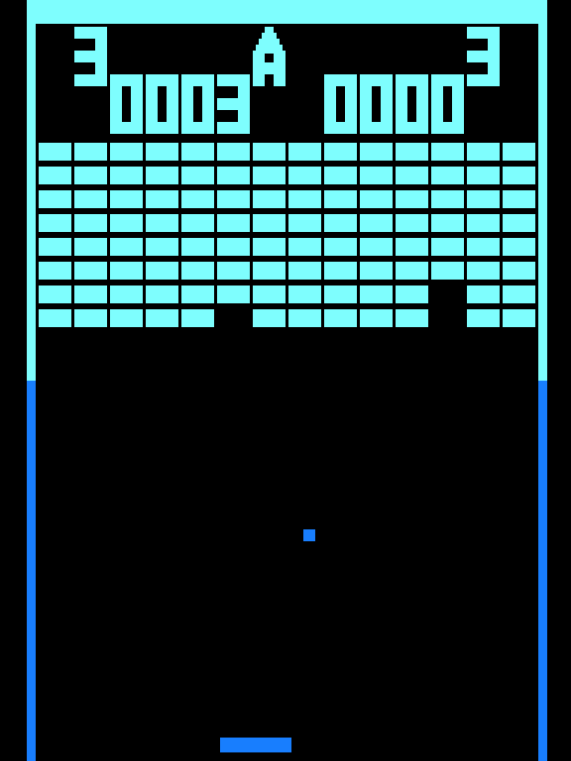
When the game is powered on, it will display the Attract Mode screen.
Insert coin
- Insert ¥100 to begin a 1-Player game.
- Insert two ¥100 coins to select a 2-Player game.
Number of players
Select whether you want to play with one or two players.
In the 2-Player game, play alternates between the two players. As each player should be sat on opposite ends of the table cabinet, the screen will flip for Player 2.
Game select
Use the Game Select dial to choose between the three variations of the game:
Once you press the "Serve" button to begin the game, you cannot change the game mode until you get a Game Over.
How to Play
Serve the ball
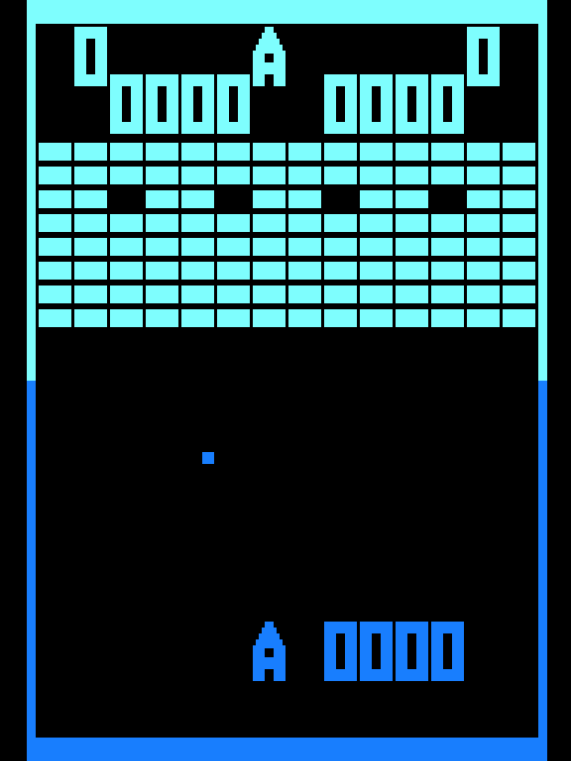
Press the "Serve Button" to serve the ball. The ball will launch from the left or right wall towards your racket.
Move the paddle left and right
Use the "Control" dial to move the racket left and right. Catch the ball on the racket to keep it in play.
- The racket can slide off the left and right sides of the screen.
- If the ball bounces off the left side of the racket, it heads to the left. If the ball bounces off the right side of your racket, it heads to the right.
- The angle of the ball's trajectory can change based on how close to the edge of the racket it is.
Break the blocks
The aim of the game is to break as many blocks as you can for a high score.
- When the ball hits a block, the block will disappear and the ball returns to the racket.
- If the ball hits a block while on a downward trajectory, it will bounce up towards the top wall.
- The ball can only break one block at a time. It must bounce off either the paddle or the top wall before it can break another. It will pass through any other blocks in its path.
- When all blocks have been broken, a new formation will appear. You keep the same ball speed and racket size.
Ball speed
The ball starts out moving slowly. Play skilfully and the ball will speed up. There are three balls speeds.
- After the ball bounces off the racket 5 times, the ball speeds up.
- After the ball breaks one of the top 4 rows of blocks, the ball speeds up again.
- If you lose a life, the ball speed will reset.
- If, after losing a life, the ball touches the top wall (causing the racket to shrink), the ball immediately returns to full speed.
Racket size
The racket starts out large. Play skilfully and the racket will get smaller. There are three racket sizes.
- After the ball bounces off the racket 9 times, the racket gets smaller.
- After the ball bounces off the top wall of the play area, the racket gets smaller again.
- If you lose a life, the racket will return to large size.
- If, after losing a life, the ball hits the top 4 rows of blocks (causing the ball to speed up), the racket will shrink on the next bounce.



Scoring
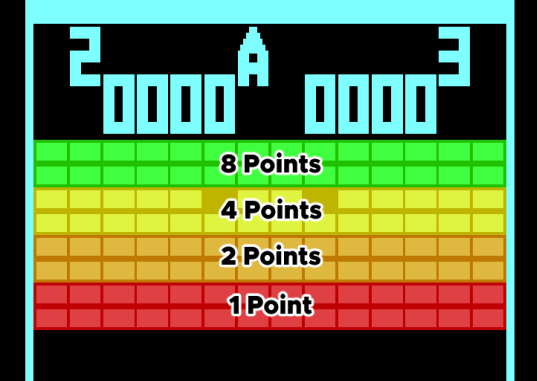
Blocks are worth different amounts of points depending on which row they are on.
- Blocks on the first and second rows are worth 1 point.
- Blocks on the third and fourth rows are worth 2 points.
- Blocks on the fifth and sixth rows are worth 4 points.
- Blocks on the seventh and eighth rows are worth 8 points.
According to the game's flyer, a "Block Fever" is when the ball bounces along the top of the block formation hitting high-scoring 8 Point blocks.
Lives
- If the ball drops past your racket into the area below, you lose a life.
- The number of extra lives per game can be adjusted using dip switches, between 3 and 6.
Replay feature
Using dip switches, you can activate the "Replay" feature. This allows a player who has hit a particular score to win a free game.
- The Replay feature is disabled by default.
- When Replay is enabled, the operator can set the score target to 400, 800, 1200 or 1600 points.
Game A
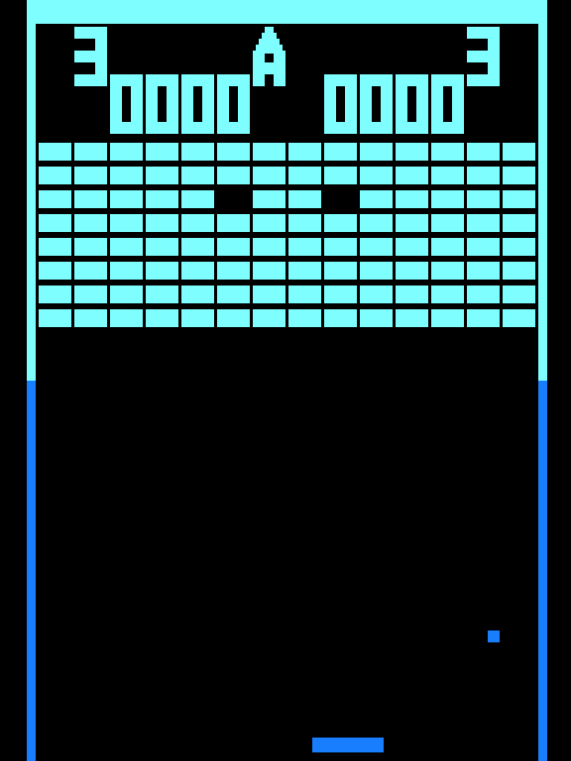
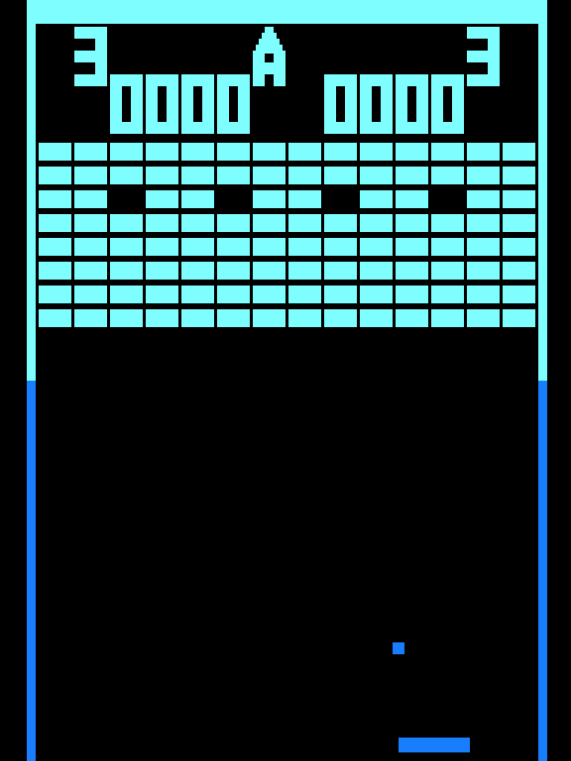
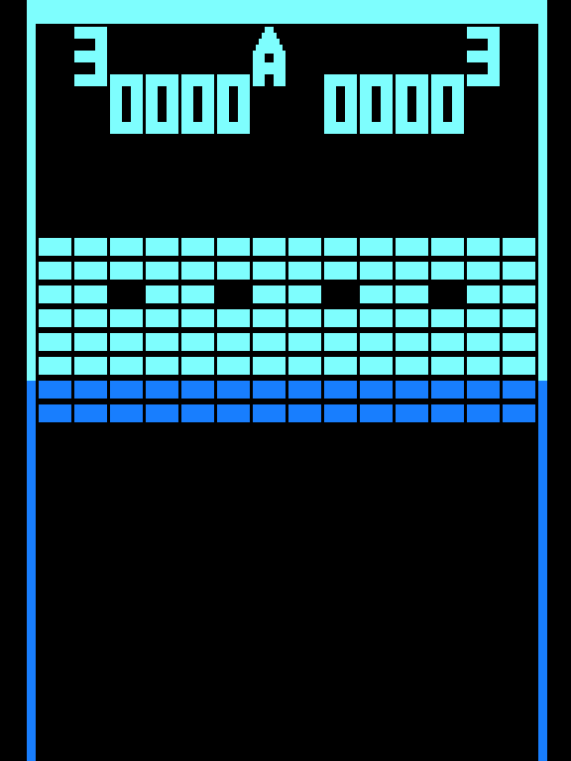
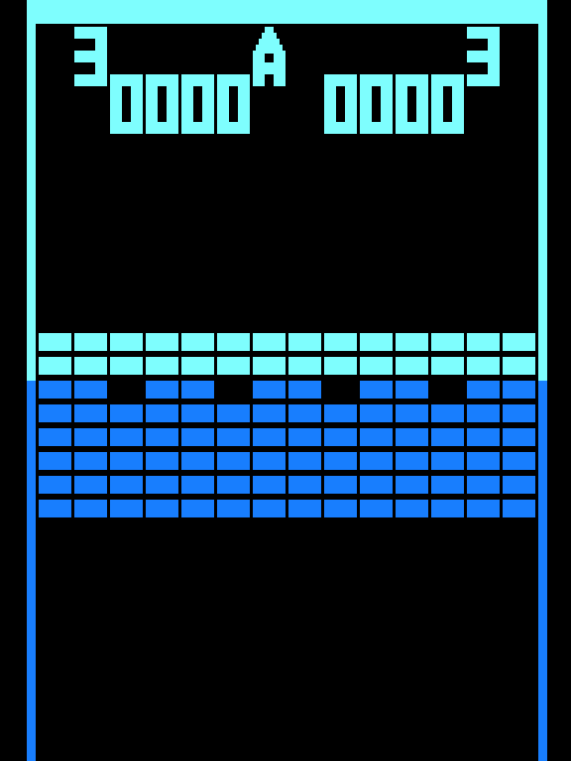
Clear out all of the blocks. If you hit one of the flashing "Handy Blocks", the block formation will move down by 4 rows.
- In Round 1, only 2 Handy Blocks will flash. From Round 2 and above, 4 Handy Blocks will flash.
- You can set the number of Handy Blocks in Round 1 to 4 using dip switches.
- You can increase the number of rows the blocks drop by after you hit a Handy Block to 8 using dip switches.
- If you clear out all the blocks except Handy Blocks, you will move on to the next set of blocks (and miss out on their points).
Game B
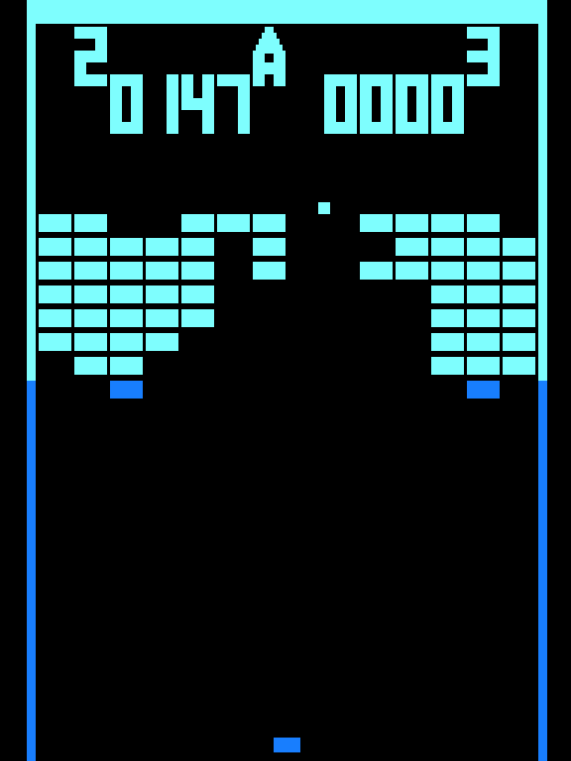
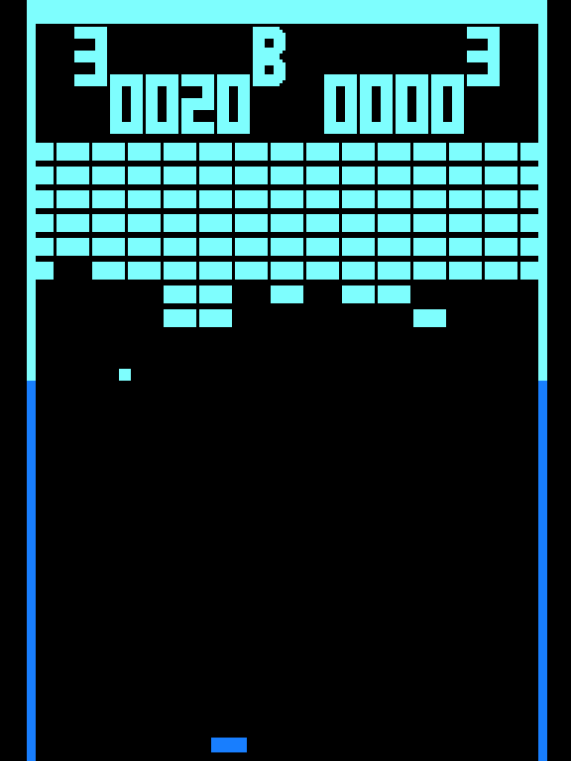
Clear out all of the blocks. The block formation scrolls from left to right in half-block increments. As the block formation moves off the right side, it reappears on the left.
Game C
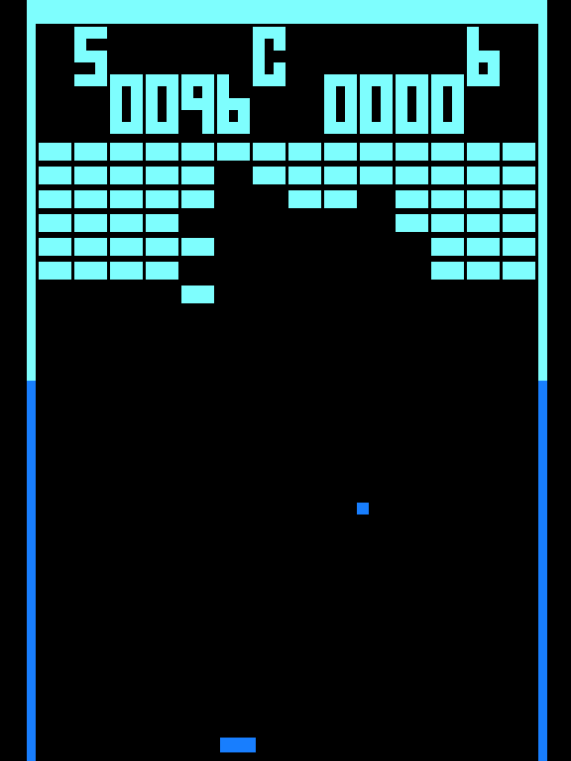
Clear out all of the blocks. The blocks are static and there are no gimmicks.
Early version: TV Computer Deluxe
Some Japanese arcade goers report encountering an early version of Block Fever without the Game Select feature.
Table Computer
In early 1978, Nintendo began advertising the "Table Computer". This was the very earliest version of Nintendo's tabletop arcade design, with a single round leg. Nintendo advertised it as having swappable games.
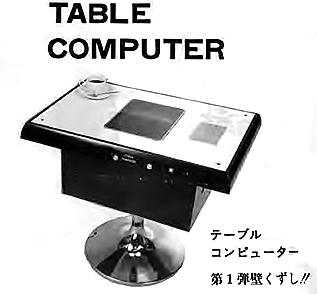
The text alongside the ad says "1st Game: Breaking Down Walls!!"
TV Computer Deluxe
In a later advertisement, Nintendo had renamed their tabletop arcade system to "TV Computer". The first named game was now Computer Othello and a second table was shown named TV Computer Deluxe. The advert includes a screenshot of a game almost identical to Block Fever but without the Game Select letter (A, B or C).
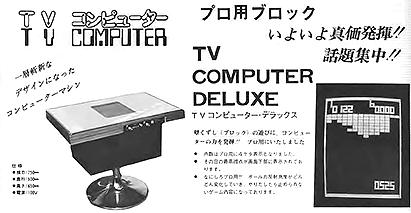
Soon after, Nintendo would again advertise Block Fever with the game selection included.
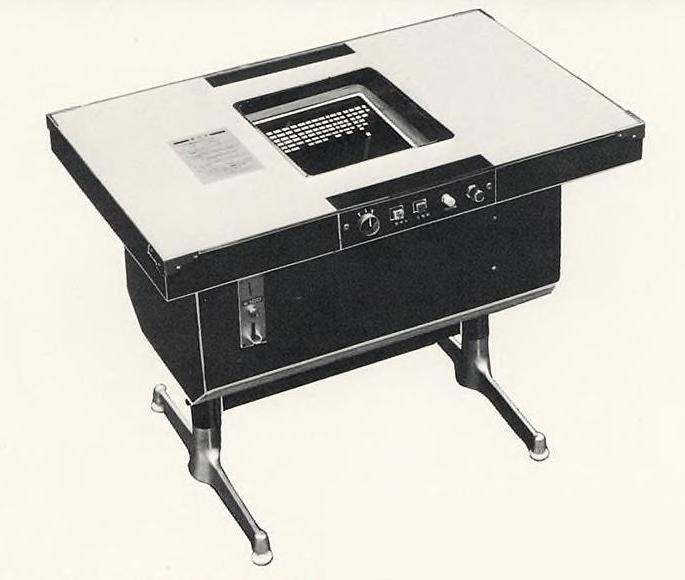
If the reports are to be believed, then the TV Computer Deluxe version of the game may have been available at some locations.
Hoei…?
A search for TV Computer Deluxe brings up records that it was a Breakout clone from 1978, but the developer is listed as "Hoei". The records cite a list produced by a former developer at Coreland named Yasuhiro Ogawa and reposted on the Mameworld forums by user Stiletto.
Hoei Sangyo were a contract developer established in 1977 to manufacture and sell arcade cabinets for other companies. Hoei gained a negative reputation for producing low-quality bootlegs, and later changed their name to Coreland in 1982. They eventually got bought by Bandai and were renamed Banpresto in 1989.
It seems that Nintendo may have contracted Hoei to produce these early tables. Hoei are not credited with either Computer Othello or Block Fever. It's possible that Hoei manufactured the tables but may not have been involved in the software.
